
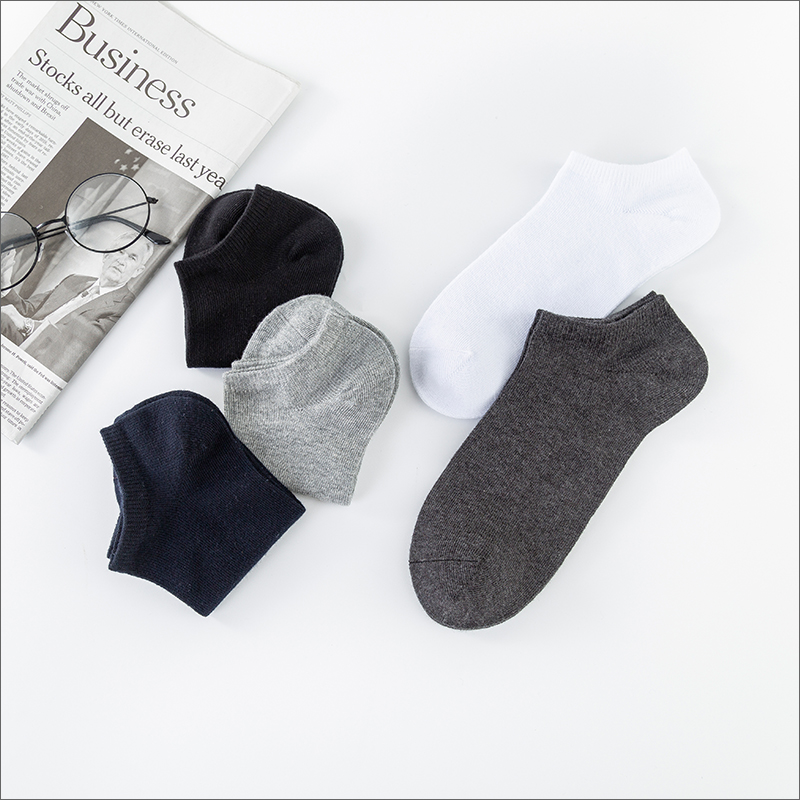
In daily life, perhaps because we are too busy and therefore ignore many details of life. For example, have you ever noticed whether your socks are suitable for you and whether they are comfortable to wear? Today, Xiao Bian will share with you what material of socks is good, for the sake of our health, what kind of socks to buy!
[cotton] usually we all like to choose to wear cotton socks, cotton has moisture absorption, moisture, heat resistance, alkali resistance, health, and skin contact without any stimulation, no negative effect, long wear on the human body is beneficial and harmless, good health performance. The expert answer is no, if the composition of a pair of socks is 100 percent cotton, then this pair of socks is cotton! Totally inelastic! Socks made of 100 per cent cotton have a particularly high shrinkage and are even less durable. Usually, socks with a cotton content of more than 75% can be called cotton socks, and socks with a cotton content of 85% are very high-grade cotton socks. Cotton socks also need to add some functional fibers to maintain the elasticity, fastness and comfort of the socks. Spandex, nylon, acrylic, polyester, etc. are very common functional fibers.
Combed cotton is the long and neat cotton fibers left after the shorter fibers are removed from ordinary fibers by a machine called a comber. Due to the removal of short cotton fibers and other fiber impurities, the cotton yarn spun from combed cotton is more delicate, and the hand feeling of the finished product is more smooth and comfortable, which is a better quality in cotton. Combed cotton more toughness, not easy to hair ball. The combed cotton yarn is more smooth and flat, and the surface of the fabric is flat without neps. The dyeing effect is also good.
[mercerized cotton] mercerized cotton is an ordinary cotton fiber after mercerizing process in concentrated alkali solution. This kind of cotton fiber has better gloss and shiny than ordinary cotton fiber on the premise that other physical indexes and properties do not change. It is like a silk component, feels more lubricious, is less prone to wrinkling, and has the characteristics of sweat absorption of cotton itself. It is cool and loose when wearing. The material of mercerized cotton can be seen in thin socks in summer.
Bamboo fiber is the fifth largest natural fiber after cotton, hemp, wool and silk. Bamboo fiber has good air permeability, instantaneous water absorption, strong wear resistance and good dyeing properties, and at the same time has natural antibacterial, antibacterial, mite removal, deodorant and anti ultraviolet function.
[spandex] spandex is commonly known as elastic fiber, with high elasticity and strong flexibility, the length of the stretch can reach 5-7 times the original fiber, adding spandex textile products can maintain the original contour. The composition of the socks must contain spandex in order to make the socks elastic and retractive, easier to wear, but also make the socks can be more close to the foot, like a swimsuit can be tightly wrapped in the footsteps, not to slip off.
[Modal] Modal has a silky luster, good drape, soft and smooth. Adding modal to the composition of socks can make the socks feel softer and more comfortable. Its luster, softness, moisture absorption, dyeing and wear resistance are better than pure cotton products.
[wood pulp fiber] wood pulp fiber unit fineness grade fine, feel very soft; Good color fastness, bright color; Good drape, soft and smooth, soft than cotton, with a unique silky feeling. Due to the natural antibacterial function of wood fiber products, the products made of wood fiber products do not need to add any synthetic antibacterial agents, and will not cause skin allergies. Has a strong water absorption and oil decontamination capacity. In particular, the water absorption and air permeability is better than that of traditional cotton fabrics and other plant fibers.
[Tencel] Tencel fiber fabric has good moisture absorption, comfort, drape and stiffness and good dyeing properties. In addition, it can be blended with cotton, wool, hemp, nitrile, polyester, etc. It can be ring spun, air spun, core spun, and spun into various cotton and wool yarns, core spun yarns, etc.
[Wool] is mainly composed of an insoluble protein, good elasticity, plump feel, strong moisture absorption capacity, good warmth retention, not easy to stain, soft luster, excellent dyeing, because it has a unique felting, so it is generally required After anti-shrink treatment can guarantee the size of the fabric. The disadvantage is that it is not easy to dry.
[nylon] synthetic fiber, like polyester commonly used for covering elastic fiber, become a frame, sometimes used as a veil (nylon 100%), wear resistance is particularly excellent, in the common textile fiber in the first place, but does not absorb sweat, smelly feet. If only for weaving flowers, basically will not affect the performance of the socks themselves. Nylon is similar to the nature of nylon, strong and wear-resistant, is the most wear-resistant synthetic fiber, the most solid one. The weight is very light, good elasticity, adding nylon in the socks can maintain high strength elasticity.
[spandex] synthetic fiber, namely the frame core, has the characteristics of high elongation and high elasticity, and has better acid resistance, alkali resistance, light resistance, wear resistance and other qualities.
[Polypropylene] Polypropylene is a name with Chinese characteristics. In fact, it should be polypropylene fiber, so it is named polypropylene. The biggest feature of polypropylene is light texture, but its own moisture absorption is very weak, almost no moisture absorption, so the moisture regain is close to zero. However, its wicking effect is quite strong, can transfer water vapor through the fiber in the fabric, which also means that the socks containing polypropylene components of its perspiration function is very strong. And because the strength of polypropylene is very high, wear-resistant stretch, so in sports socks will often see containing polypropylene components.
[rabbit hair] fiber soft, fluffy, good warmth retention, good moisture absorption capacity, but the strength is low, mostly blended, commonly used rabbit hair content ratio of rabbit hair 70% nylon 30%.
[Acrylic Cotton] belongs to blended yarn (usually blending can complement the shortcomings of the two raw materials). The commonly used acrylic cotton content ratio is 30% acrylic fiber and 70% cotton. It feels plump, is more wear-resistant than cotton, has bright color and uniform strip drying, and also has the function of cotton sweat absorption and deodorization. Acrylic is known as artificial wool. With soft, bulky, not easy to dye, bright color, light resistance, antibacterial, not afraid of insects and other advantages.